Research
SWOT
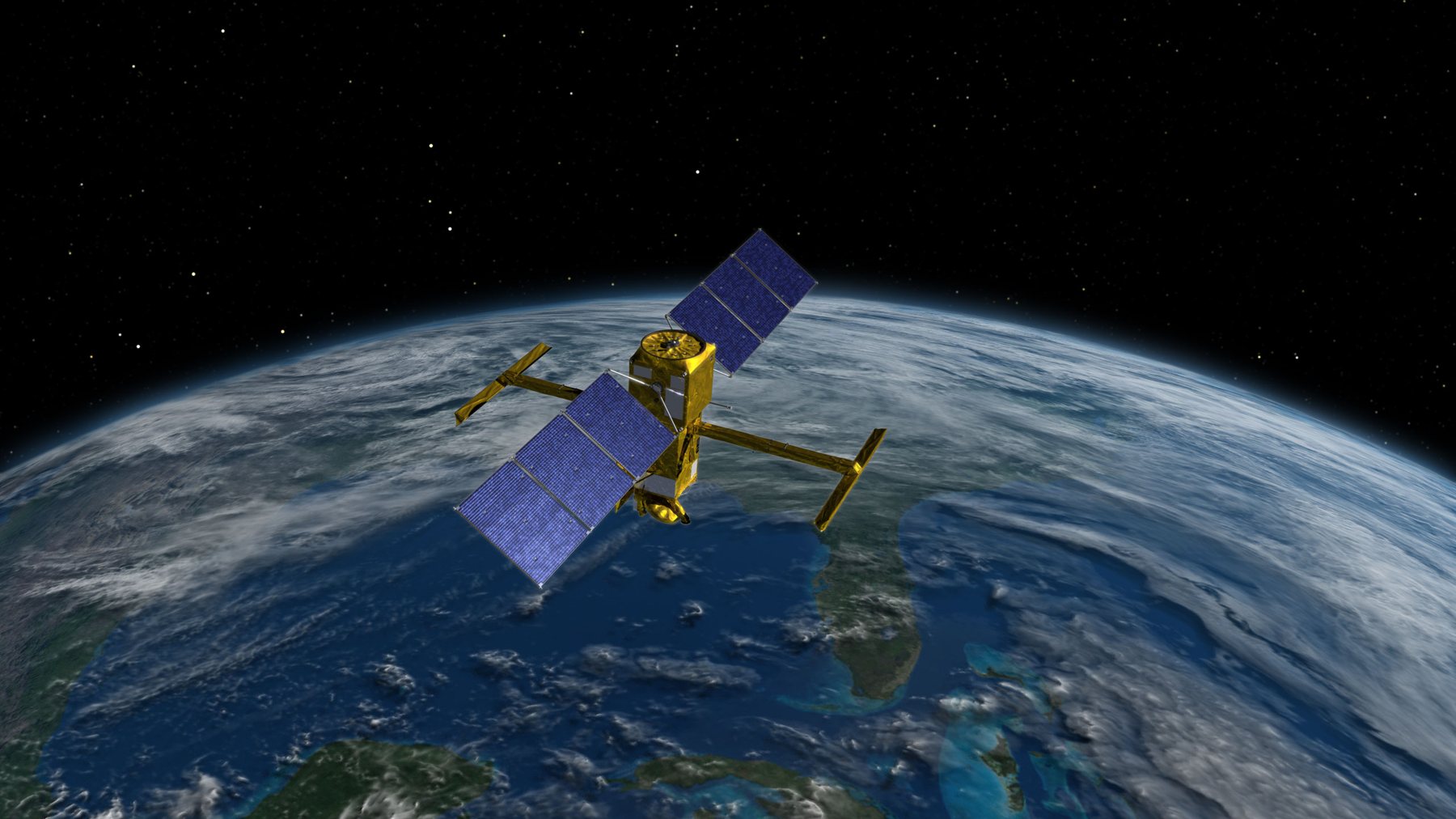
Surface Water and Ocean Topography satellite mission.
Selected papers
Vinogradova et al. (2025), A new look at Earth’s water and energy with SWOT (Nature Water). link
Simoes-Sousa et al. (2025), The May 2024 flood disaster in Southern Brazil: Causes, impacts, and SWOT-based volume estimation (GRL). link
Wang et al. (2025), SWOT mission validation of sea surface height measurements at sub-100 km scales (GRL). link
Kachelein et al. (2025), Sub-100 km ocean processes revealed by structure functions of SWOT sea surface height and in situ observing network (JGR). link
Fu et al. (2024), The Surface Water and Ocean Topography mission: A breakthrough in radar remote sensing of the ocean and land surface water (GRL). link
Wang et al. (2022), On the development of SWOT in-situ calibration/validation for short-wavelength ocean topography (JTECH). link
Chelton, Samelson, and Farrar (2022), Effects of uncorrelated measurement noise on SWOT estimates of SSH, velocity, and vorticity (JTECH). link
Morrow et al. (2019), Global observations of fine-scale ocean surface topography with the SWOT mission (Frontiers in Marine Science). link
S-MODE
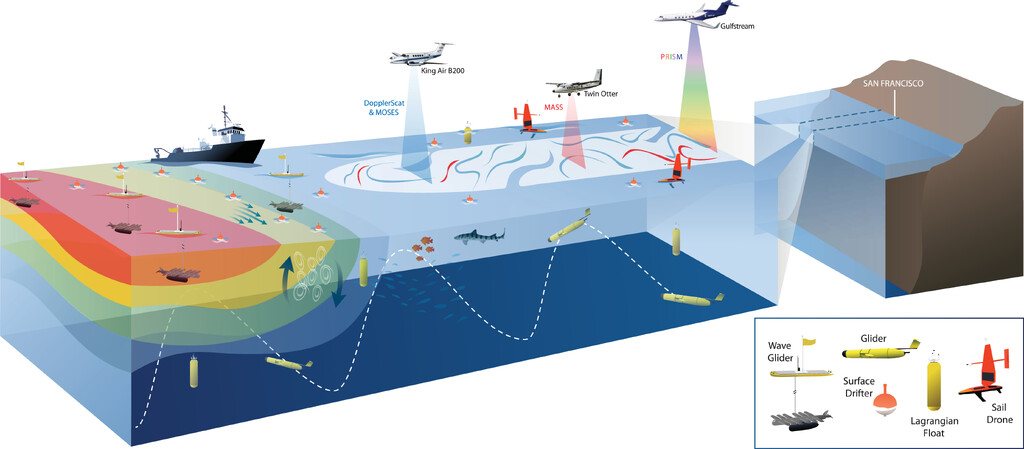
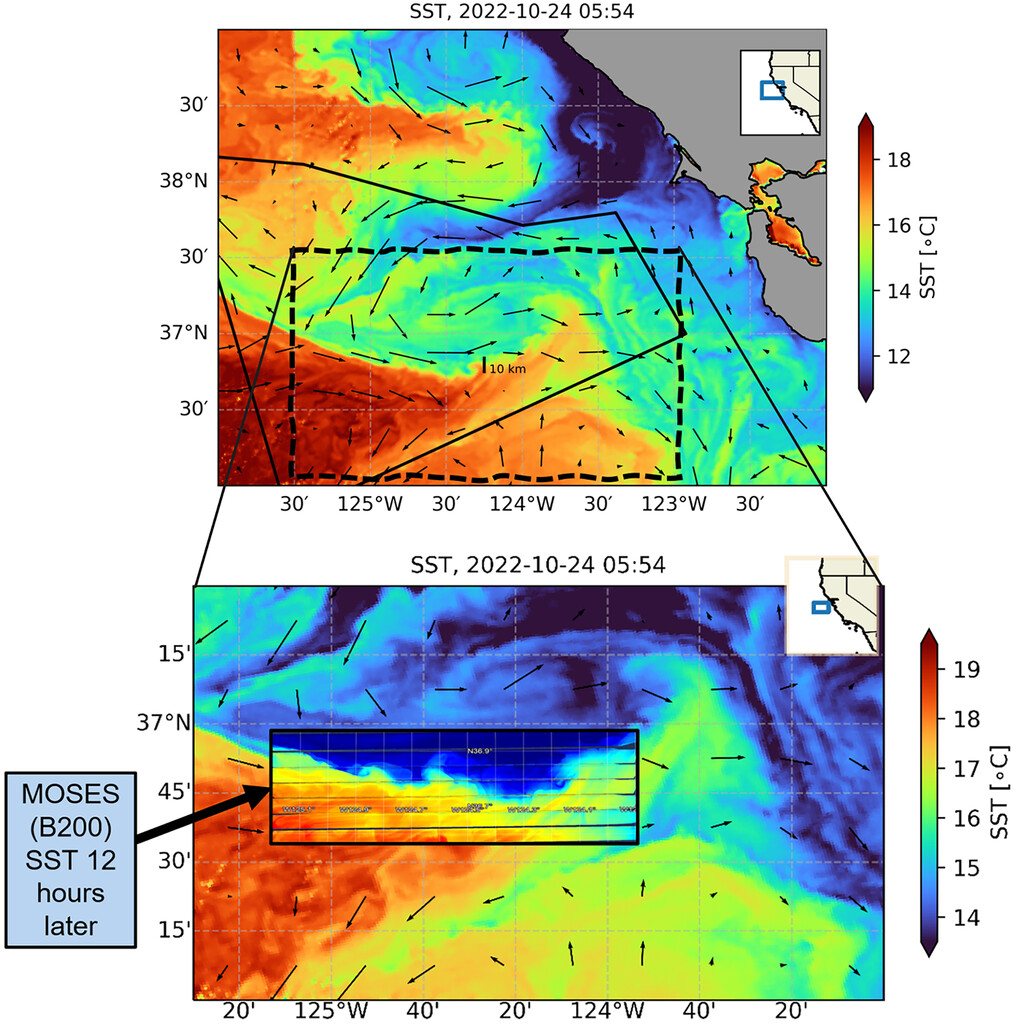
S-MODE is a NASA Earth Venture Suborbital investigation that combines novel aircraft remote sensing techniques with coordinated measurements from ships and a fleet of uncrewed vehicles and other measurement platforms to study submesoscale ocean dynamics (scales less than about 10 km) and their contribution to vertical transport in the upper ocean. Oceanic fronts and the submesoscale instabilities that develop on them are thought to be important for vertical transport in the upper ocean, but these rapidly evolving features have been difficult to observe in detail. High-resolution computational models produce the features, but they need to be checked against observations. S-MODE addresses these challenges with coordinated sampling from three research aircraft, a research vessel, and dozens of uncrewed surface and subsurface platforms.
Text from Farrar et al. (2025), Bulletin of the American Meteorological Society: 10.1175/BAMS-D-23-0178.1 (AMS page).
Selected papers
Lang et al. (2026), Estimating submesoscale-driven particulate organic carbon flux from remote sensing at a dynamic upwelling front (JGR: Oceans). link
Torres et al. (2025), Submesoscale eddy contribution to ocean vertical heat flux diagnosed from airborne observations (GRL). link
Farrar et al. (2025), S-MODE: the Sub-Mesoscale Ocean Dynamics Experiment (BAMS). link
Westbrook et al. (2024), Submesoscale Ocean Dynamics Experiment (S-MODE) data submission report (WHOI Technical Report). link
Tropical Dynamics
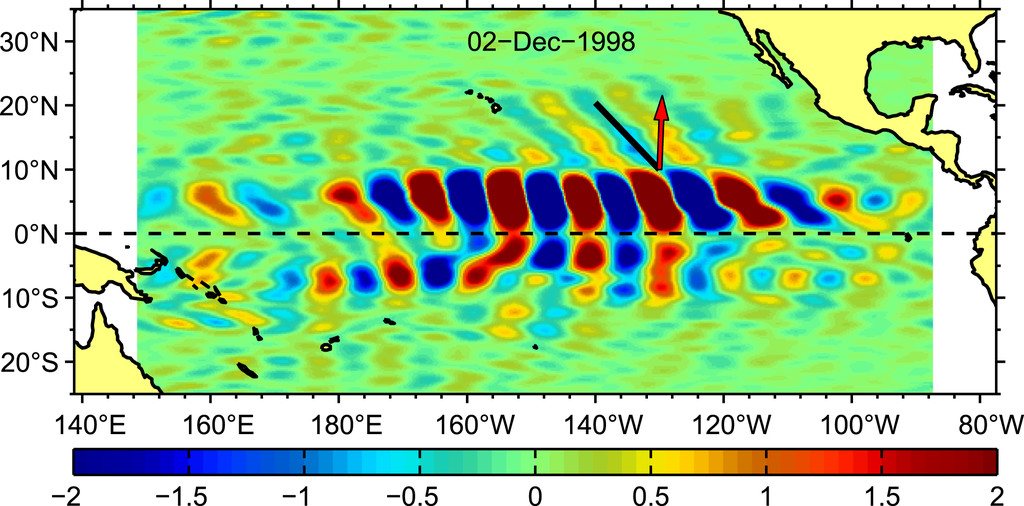
Figure credit: Farrar et al. (2021), Journal of Physical Oceanography. 10.1175/JPO-D-20-0048.1
Selected papers
Farrar, Durland, Jayne, and Price (2021), Long-distance radiation of Rossby waves from the equatorial current system (Journal of Physical Oceanography). link
Hasson et al. (2019), Intraseasonal variability of surface salinity in the eastern tropical Pacific associated with mesoscale eddies (Journal of Geophysical Research: Oceans).
Lee et al. (2018), Monitoring and interpreting the tropical oceans by satellite altimetry (Satellite Altimetry Over Ocean and Land Surfaces).
Greatbatch et al. (2018), Evidence for the maintenance of slowly varying equatorial currents by intraseasonal variability (Geophysical Research Letters).
Zuidema et al. (2016), Challenges and prospects for reducing coupled climate model SST biases in the eastern tropical Atlantic and Pacific Oceans (BAMS). link
Farrar and Durland (2012), Wavenumber-frequency spectra of inertia-gravity and mixed Rossby-gravity waves in the equatorial Pacific Ocean (Journal of Physical Oceanography).
Durland and Farrar (2012), The wavenumber-frequency content of resonantly excited equatorial waves (Journal of Physical Oceanography).
Farrar (2011), Barotropic Rossby waves radiating from tropical instability waves in the Pacific Ocean (Journal of Physical Oceanography).
Farrar (2008), Observations of the dispersion characteristics and meridional sea level structure of equatorial waves in the Pacific Ocean (Journal of Physical Oceanography).
Farrar and Weller (2006), Intraseasonal variability near 10 N in the eastern tropical Pacific Ocean (Journal of Geophysical Research). link
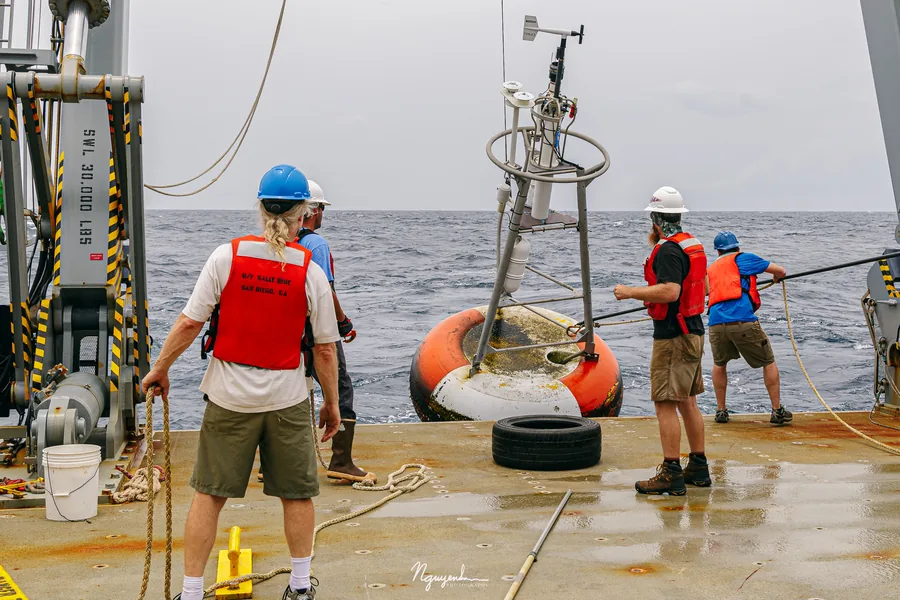
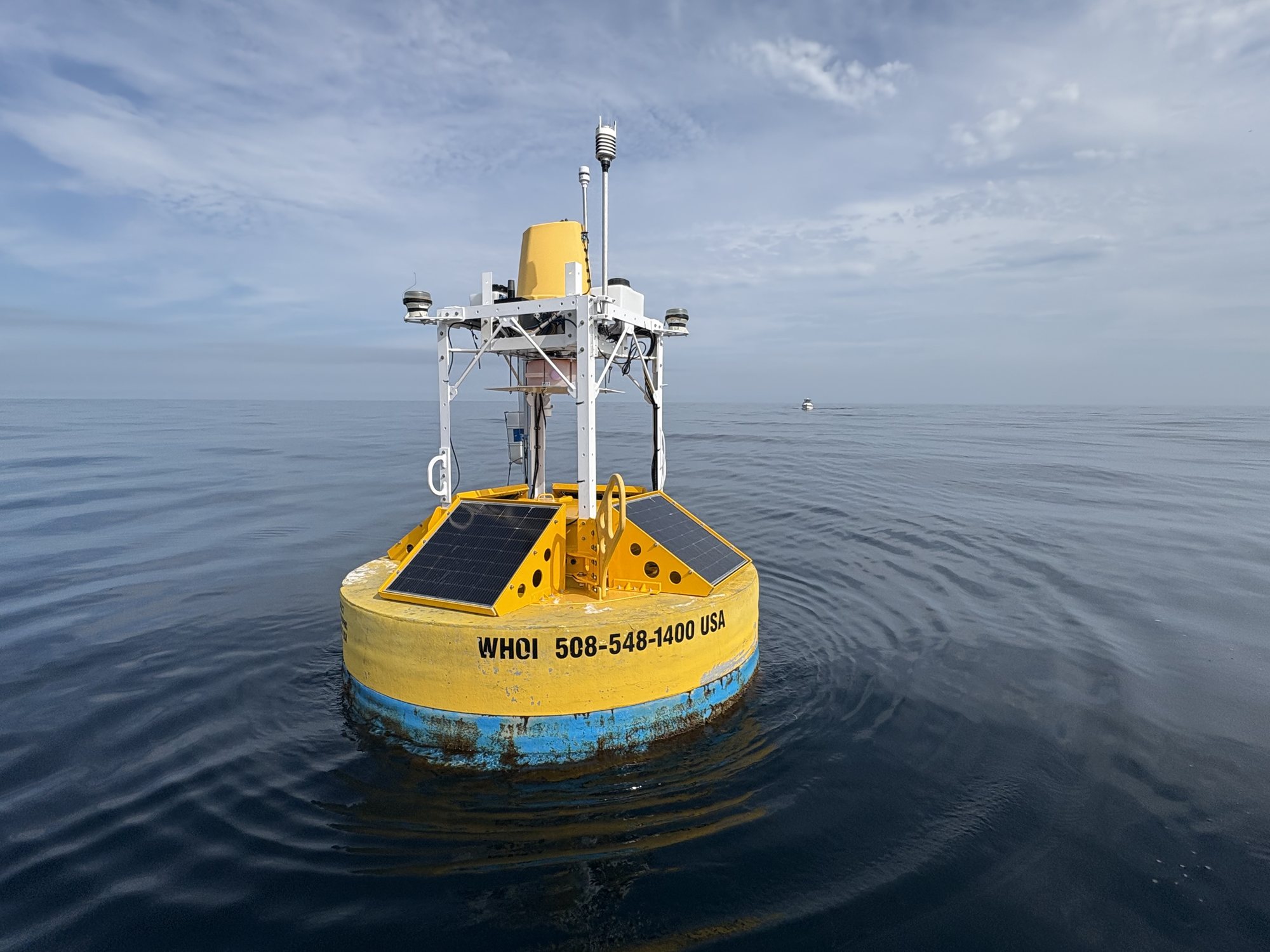
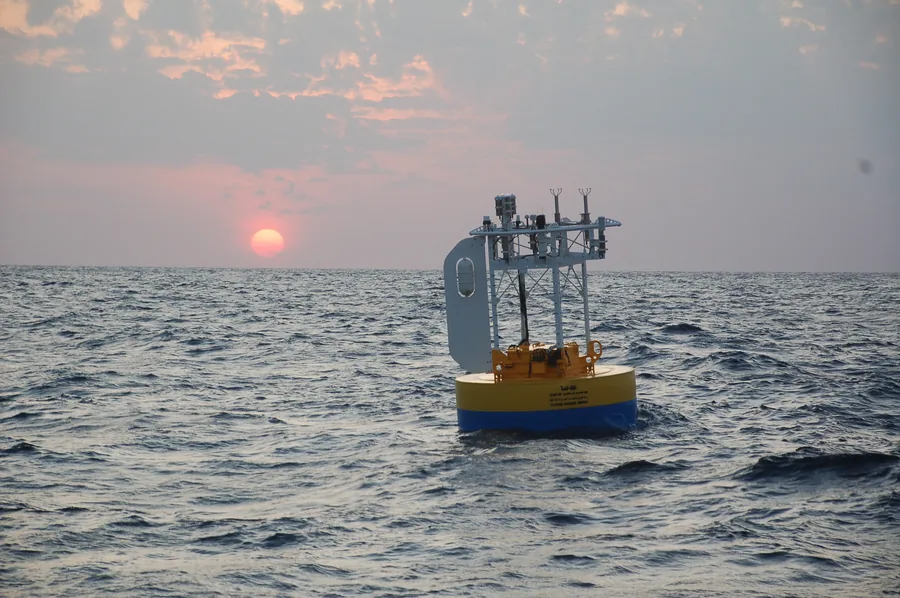
Air-Sea Interaction Measurements from Buoys
Buoy-based observing studies of upper-ocean and air-sea interaction processes. UOP SAFARI project page.
Selected papers
Riihimaki et al. (2024), Ocean surface radiation measurement best practices (Frontiers in Marine Science). link
Zippel et al. (2022), Parsing the kinetic energy budget of the ocean surface mixed layer (GRL). link
Joseph et al. (2022), Longwave radiation corrections for the OMNI Buoy Network (JTECH). link
Zippel et al. (2021), Moored turbulence measurements using pulse-coherent Doppler sonar (JTECH). link
Schlundt et al. (2020), Accuracy of wind observations from open-ocean buoys: correction for flow distortion (JTECH). link
Weller et al. (2019), Moored observations of surface meteorology and air-sea fluxes in the northern Bay of Bengal (Journal of Climate). link
Wijesekera et al. (2016), ASIRI: An ocean-atmosphere initiative for Bay of Bengal (BAMS). link
Schmitt et al. (2015), SPURS-2: Diagnosing the physics of a rainfall-dominated salinity minimum (Oceanography). link
Farrar et al. (2015), Salinity and temperature balances at the SPURS central mooring during fall and winter (Oceanography). link
Weller et al. (2016), Air-sea interaction in the Bay of Bengal (Oceanography). link
Air-Sea Interaction Measurements from Uncrewed Surface Vehicles
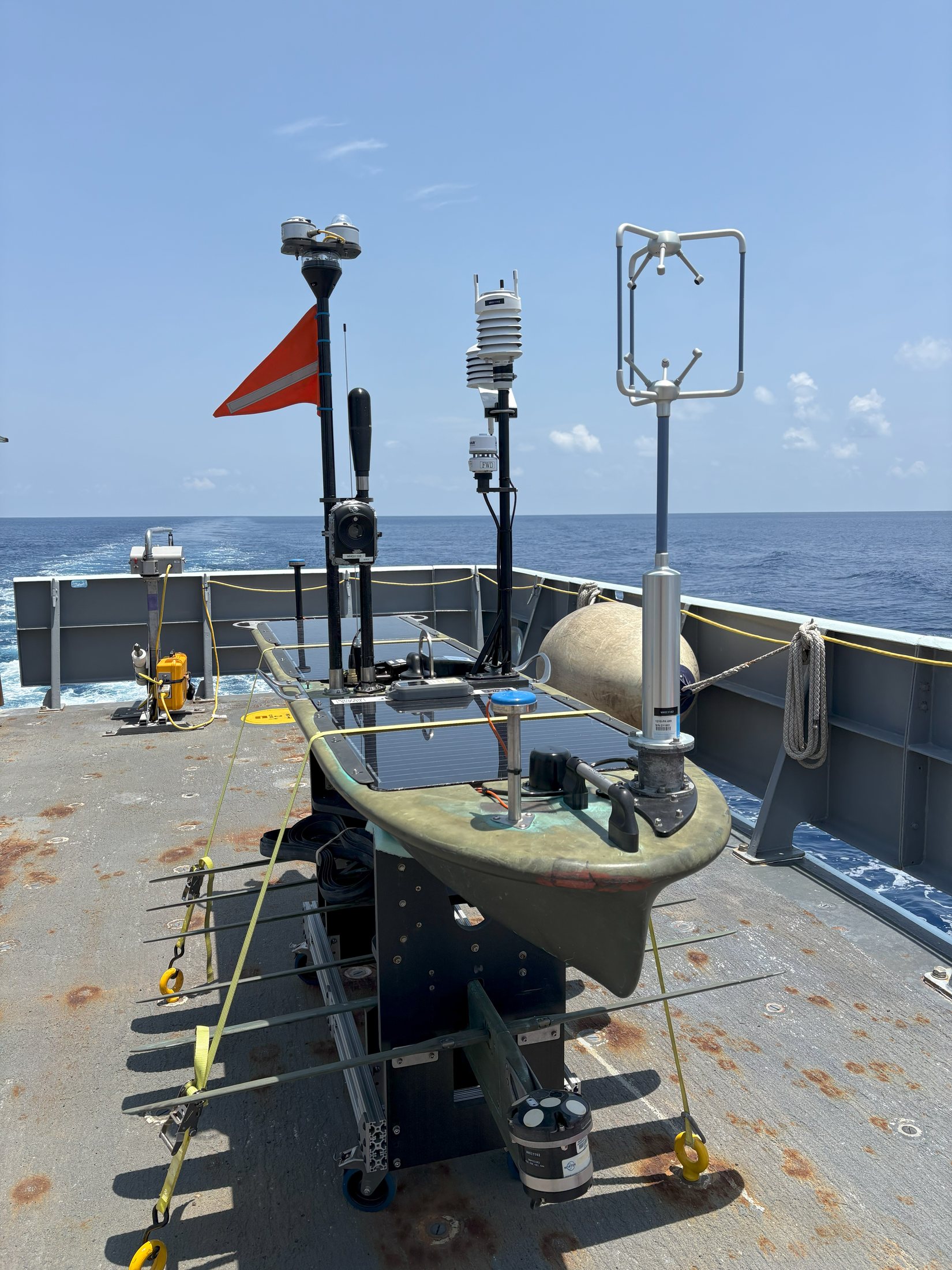
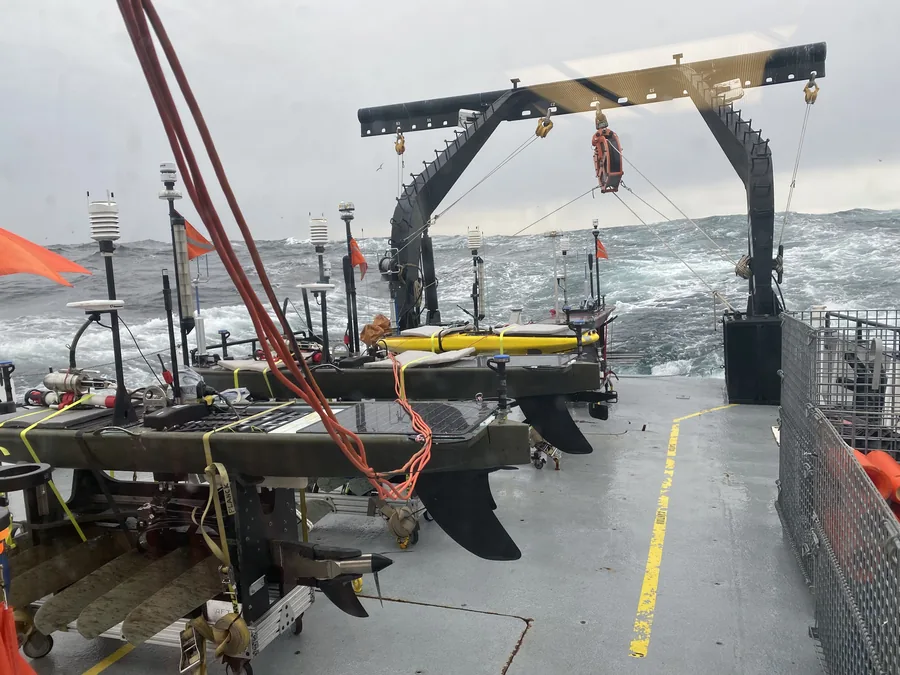
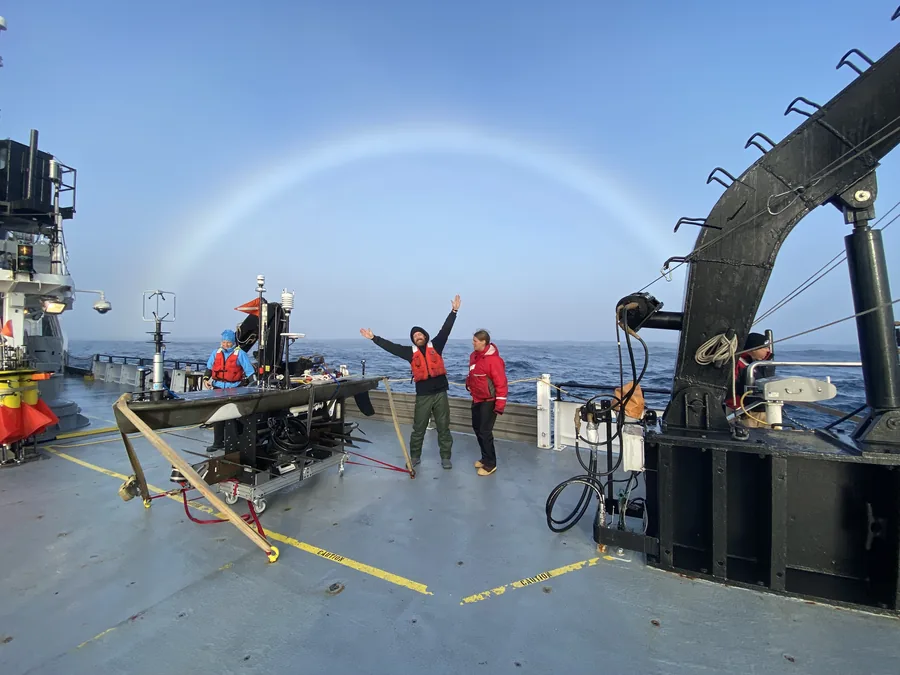
Uncrewed surface-vehicle observations of air-sea interaction and upper-ocean processes.
Selected papers
Bhuyan et al. (2026), Acoustic Doppler current profiler measurements from Saildrones with applications to submesoscale studies (JTECH). link
Grare, Lenain, and Farrar (2025), Observing ocean-atmosphere fluxes from autonomous surface vehicles (GRL). link
Hodges et al. (2023), Evaluation of ocean currents observed from autonomous surface vehicles (JTECH). link
Zhang et al. (2019), Comparing air-sea flux measurements from a new unmanned surface vehicle and proven platforms during SPURS-2 (Oceanography). link
Rainville et al. (2019), Novel and flexible approach to access the open ocean: Uses of the Research Vessel Lady Amber during SPURS-2 (Oceanography). link